
What’s the Real Difference Between Chrome and Stainless Steel Finishes?
Although both finishes are widely used in modern kitchens, they behave quite differently in daily use.
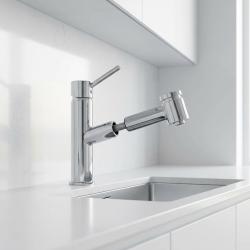
Chrome taps are usually made from brass with a polished chrome coating. This creates a highly reflective surface that feels sleek and modern. However, that same reflectiveness makes every mark more visible.
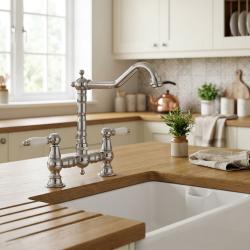
Stainless steel taps, particularly brushed finishes, have a softer, more muted appearance. Instead of reflecting light sharply, they diffuse it, which helps conceal small imperfections.
This difference is not just visual. It directly affects how often you need to clean the tap and how it looks between cleans.
Which Finish Shows Less Dirt and Water Marks?
This is where the biggest difference becomes clear.
Chrome taps tend to highlight:
- Water spots
- Fingerprints
- Soap residue
- Limescale buildup
Because of their mirror-like surface, even small marks become noticeable.
Brushed stainless steel taps, on the other hand, are far more forgiving. Their texture softens the appearance of:
- Water droplets
- Light residue
- Everyday handling marks
If your goal is a tap that looks clean with minimal effort, stainless steel has a clear advantage.
Chrome vs Stainless Steel: Maintenance Comparison
|
Feature |
Chrome Tap |
Stainless Steel Tap |
|
Visibility of Water Marks |
High |
Low |
|
Fingerprint Visibility |
High |
Low |
|
Cleaning Frequency |
More frequent |
Less frequent |
|
Ease of Cleaning |
Easy but often needed |
Very easy and less frequent |
|
Long-Term Appearance |
Can show wear sooner |
More consistent over time |
Both finishes are easy to clean, but stainless steel requires less attention to maintain a consistent look.
How Do They Perform Over Time?
Over time, the difference becomes more noticeable.
Chrome taps maintain their shine, but only with regular cleaning. Without it, they can begin to look dull due to buildup rather than actual damage.
Stainless steel taps age more subtly. Fine marks or changes in the surface are less visible, which allows them to maintain a balanced appearance even with heavy use.
This makes stainless steel particularly suitable for busy kitchens where constant upkeep is not practical.
Which Finish Fits Your Kitchen Style Better?
Maintenance is important, but design still plays a role.
Chrome taps suit:
- Highly modern or minimal kitchens
- Spaces where shine and contrast are key
- Environments where regular cleaning is not an issue
Stainless steel taps suit:
- Contemporary kitchens with softer tones
- Practical, high-use spaces
- Designs that prioritise subtlety and consistency
The choice often comes down to whether you prefer a bold, reflective statement or a quieter, more forgiving finish.



Daily Care Differences Between the Two
The cleaning process itself is simple for both, but frequency differs.
For chrome taps:
- Regular wiping is needed to maintain shine
- Drying after use prevents visible water spots
For stainless steel taps:
- Occasional wiping is usually enough
- Marks are less noticeable between cleans
This difference becomes significant over time, especially in kitchens that see frequent use.


Small Details That Influence Long-Term Maintenance
Beyond the finish itself, a few additional factors affect how easy a tap is to maintain.
- The shape of the tap can influence how water settles
- Smooth edges are easier to wipe than detailed designs
- The quality of the finish affects resistance to buildup
A well-designed tap in either finish will always be easier to maintain than a poorly finished one.
Common Mistakes When Choosing Between These Finishes
- Choosing chrome without considering how often it needs cleaning
- Assuming stainless steel looks dull rather than refined
- Ignoring how water quality affects visible buildup
- Prioritising appearance over long-term usability
Understanding how each finish behaves helps avoid these issues.

Choosing between chrome and stainless steel kitchen taps is not simply a matter of appearance. It is a decision that affects how the tap fits into your daily routine.
Chrome offers a sharper, more reflective presence. It can elevate the look of a kitchen, but it requires consistent care to maintain that effect. Stainless steel, by contrast, offers a more balanced and forgiving surface that adapts easily to everyday use.
Over time, this difference becomes more noticeable. A finish that requires less attention often feels more practical, especially in kitchens that are used frequently.
The right choice depends on how you want your kitchen to function. If you value a polished, high-contrast look and are comfortable maintaining it, chrome is a strong option. If you prefer a quieter, more effortless experience, stainless steel provides a more practical and enduring solution.


